A Friend’s Wisdom

IMG_0595

Marion and I first met in seventh grade at our middle school library. I think we were browsing the magazines at the resource center. Little did I realize the impact that encounter would have.

She was even taller than I was—and I was tall for my age—and immediately seemed more like a teacher than another student. It was instantly clear that she was poised, inquisitive, funny, and brilliant.  After just a few minutes, I knew I wanted to be her friend.

From the start, I was blown away by Marion’s command of every situation. She seemed to have no anxiety or trepidation.

I remember when Marion, then a 12-year-old girl with thick plastic glasses and feathered brown hair, introduced herself to my parents. She walked up to them and said confidently, “Hello Mr. and Mrs. A. It’s nice to meet you. I’m a friend of your daughter’s. How are you?”

This girl seemed on a level with my highly-educated, crazy-smart mom and dad, harboring no qualms about having an actual conversation with them.

That was her persona: no fear. Underneath, I know she had her doubts. We all do. But she lived her life by a bold and brave set of principles that pushed her forward.

All this made it unspeakably painful when she died far too young in her mid-thirties, from cancer.

Her legacy lives on with me and so many of her friends and family. I learned a lot from Marion: she helped me become more comfortable with social situations, more able to talk to people, and more open. She showed me how to express opinions to peers and even to take joy from debating with them. We shared a love of language that led to lots of clever wordplay.

Marion and I bonded during a trip we won in a language contest, traveling to Paris to spend a month studying at the Sorbonne. Though we were never exactly joined at the hip—we were both too strong-minded to be utterly dependent on each other—we shared loves (anything French, and, by extension, European) and hates (boys who tried too hard to seem cool but weren’t; anyone who was fake). We laughed at our experiences (riding the public bus, no matter the smell, me trying to shield my nose with my t-shirt, and Marion ridiculing me), and in many a long-distance call, we decried the injustices and idiocies of the world, trying valiantly to live a higher truth.

Her own search for her true self took her to live in Greece, where her dad was from, and to start a school there. It was a tough journey, joyful one day, difficult the next, and downright tragic at the end.

In honor of Marion in what would have been her birthday (and yet another year without her), I offer some notes I found while sorting through an old box of office stuff from my last move.

Likely I made the jottings during one of Marion’s visits, or after a long phone call. My long search for the virtues was ongoing, and I clearly wanted to memorialize her philosophical thoughts. I’ve always been a seeker of wisdom, and I look for it everywhere. Today I study practical life philosophy in my free time, and now I’m guarding these notes in my curated stash of wise words.

This was written more than 10 years before her death, in around 2000. Literally, the title I wrote at the top was:

Marion’s wisdom 

And here are the nuggets that I recorded:

If you’re the best in one thing, you’ll never have time for other things. If you’re third or fourth, you’ll be able to participate in other things.

Find a group of people you like and surround yourself with them.

Plant a garden if you can.

People who spend too much time exclusively with computers get stupid.

Be happy with yourself.

Meredith is perfect. [sic!]

It’s hard to go against the stream.

Money isn’t everything.

See those people you disrespect or who do bad things as little ants moving in the distance.

Don’t let other people’s judgments of you become your judgment of you.

This January, as we set our resolutions, I’ll be taking these thoughts to heart. I hope to be more like my wise friend.
Take it from Thor: Laugh a Little

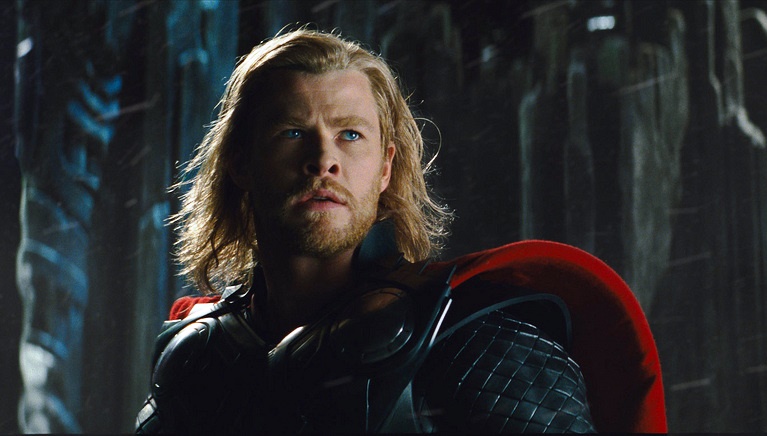
Thor (creative commons)

Watching Thor: Ragnarok reminded me: why do we have to take ourselves so seriously?

The genius of this comic-book movie is that everything is played as something of a joke, or at least with a degree of humor.

The most obviously hilarious elements spring from Jeff Goldblum’s perfect “Grandmaster,” and Chris Hemsworth’s Thor is a font of semi-self-aware observations and childish arguments with the Hulk, the neurotic Bruce Banner, and the preening, self-congratulatory Loki. Even the drunken Valkyrie, the rabid fire monster, and the over-the-top villain Hela are absurd in themselves, acknowledging with their smirking expressions that they are—as in a comic book—overdrawn.

This is exactly what a comic-centered movie should be: an entertainment that understands its value lies in larger-than-life characters with awesome strengths and quirky foibles. I give director Taika Waititi credit. He shows us god-like figures (or in Thor’s case, an actual god) who can do it all, and make it look (fairly) easy, while laughing about their absurd predicaments on some level.

The experience as a viewer is a far cry from the “dark,” overly violent, crazy serious comic-book character films we’ve seen in recent years: Spider-Man 3, The Dark Knight, Man of Steel, Batman v. Superman, etc.

If only we could all live with a small smile hovering around the corners of our mouth, like the big-screen Thor. Everywhere I look these days, people are serious. In fact, they demand to be taken seriously, whether they are in favor of something, against something, or just speaking for the most important something: themselves.

Gone are the days of blindly following in one’s father’s or mother’s footsteps, thankfully, but the by-product of our perceived freedom is that the whole of life is now one big game of showmanship.

We believe that we have to appear perfect and convince others of that fact; we must make our case so all can see our value. (It reminds me of the Razzle Dazzle ‘Em scene from the musical/movie Chicago, but without the fun.)

Many people feel that they must defend their own self-importance constantly and attack all who challenge it. Trump daily demonstrates this kind of insecure posturing, sucking the life out of any real public discussion, turning it all into black-and-white, us-vs.-them, I’m-right-you’re-an-idiot.

Heaven forbid we should take a step back and poke fun at ourselves, or make jokes about our own ridiculousness. No wonder people in other countries often see Americans as self-promoting and arrogant.

But how to break out of this humorless zone? Especially given the immense problems our country and our world face, in addition to the challenges of everyday life?

Many days, I just can’t seem to find much to laugh about, even as I pour through my TV, movie, and streaming listings. Great dramas? Yes. Reality TV? Indeed. Science fiction? Check. But humor, for me, is limited to one or two late-night shows, a smattering of stand-up acts, occasional gem-in-the rough, out-of-the-way small screen series, and re-runs of classics that still don’t disappoint like Seinfeld.

I only wish I, too, could be more humorous to add to this limited corpus. I can make my family laugh from time to time, but that’s about it these days. If only the gods had gifted me with great humor! I can appreciate it; I can enjoy it; and I can even cultivate it in my own children, both of whom have done drama performances that made people laugh out loud.

Perhaps the next generation, saddled with ever-increasing problems, will take the comic reins even more forcefully, letting the genie out of the bottle… and easing our self-importance just a bit.

Living the dream

Apple_IIe,_Google_NY_office_computer_museum.jpg
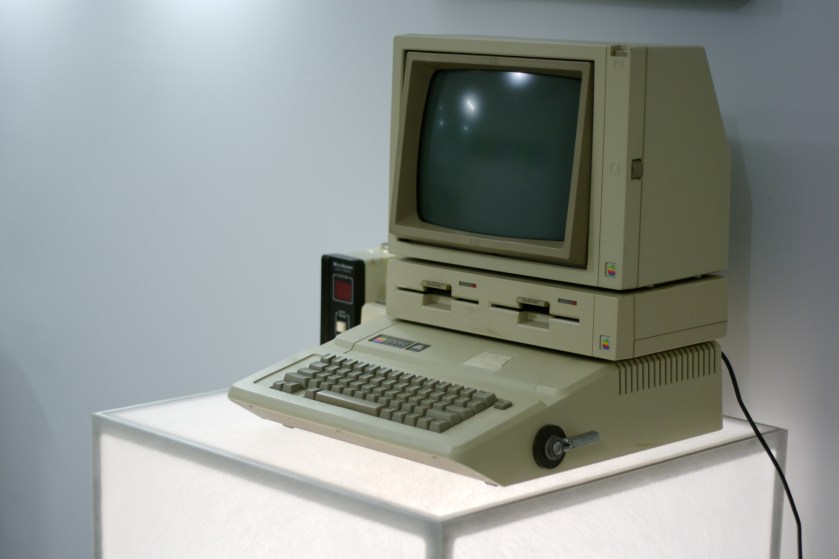
Apple IIe: The computer my dad brought home in 1983. (Photo by Marcin Wichary)

I always dreamed of becoming a writer and artist. And I did—just not exactly in the way I dreamed it. I am a writer professionally, focused in my job on science and technology. In my personal time, I write about modern life as a woman and mother, about what holds us back and what helps us thrive, and about philosophies of life going back to ancient times. My art projects are a combination of creative crafts and, when time permits, a range of other classic forms.

I’ve realized some of my dreams, and I have also worked hard to change my focus as my interests have evolved. I’ve tried to keep learning and growing, to build new strengths and keep the old.

Now, in some ways, it feels as if I’m returning home.

I find myself surrounded by science and technology researchers at my new job. Almost all have PhDs in engineering or computer science fields. They share many of the traits of focused intellectuals everywhere: a sense of purpose, a belief that theirs is the most important work, and a brainy concentration able to tune out all else.

This all feels very familiar to me. My dad was a mathematician. He was also a self-trained computer scientist, the first one who taught courses in that field at his university. He was a pioneer.

His interest in computers permeated some of my early memories. Like when he brought home our first computer, an Apple IIe, in 1983.

On a tiny desk in the corner of our dining room, the boxy black screen lit up with green characters when you typed on the keyboard. Magic! At the time, none of my friends had computers. It was cutting-edge.

At first, it seemed more like a science experiment than a useful tool. That was 1983, remember! What did you do with a computer back in those days if you weren’t a computer science researcher?

There were no GUI interfaces or desktop-computer video games or digital photos or social media or instant messaging. No icons, just typed-in text. My teachers did not require we word-process homework and there was no Internet (at least that I could access) to help us research assignments. None of my friends had email (although I believe Dad did, very early on).

In a search to make the computer fun, Dad soon found a “cool” piece of software (on a floppy disk that made horrible crunching sounds when you inserted it) for me and my sister.

It was an early text-based role-playing game that asked a series of yes or no questions. The player would type in answers in an effort to find hidden treasure deep within a castle. I never won. I got stuck at the well. And later I found myself standing in front of an armed knight. Was I armed too? I can’t remember. And I cannot ask my dad, because he died much too young in 1999.

At my new office, a woman I encountered at a social event said to me: “You’re living the dream! You’ll get to write about a lot of very cool things in that job.” She works for a different team and seemed quite taken with the innovative efforts of the researchers I’m surrounded with.

When I heard that, I felt that Fortuna was smiling down on me. Fate willing, as the ancient Stoic philosophers say, I will enjoy this work. Fate willing, I will teach my daughters that you can change and grow what you do professionally and land in a good place.

And no matter what may come, I will continue to feel a connection to my father and his groundbreaking work whenever I turn on a computer.

The magic of new clothes

IMG_4115
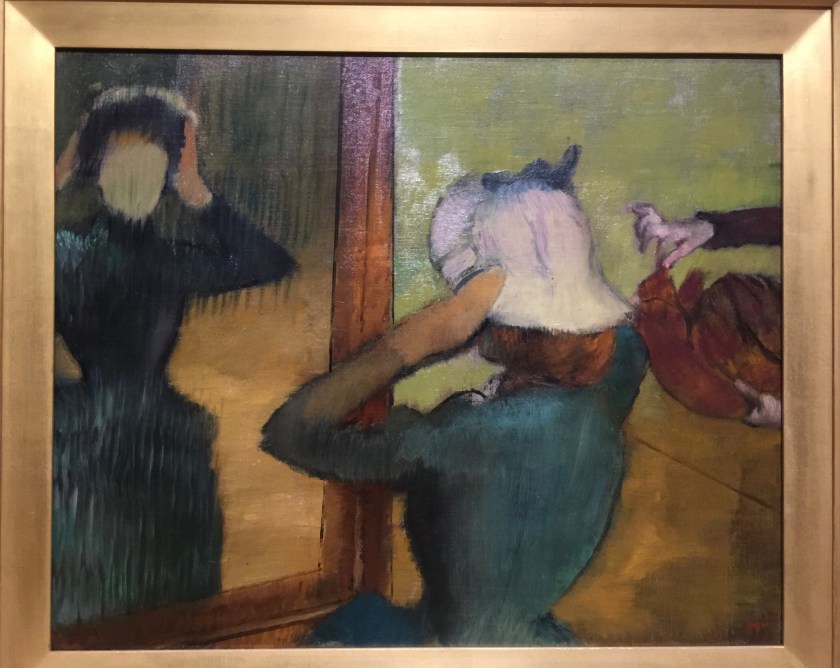
The magic of a new hat as depicted by Edgar Degas. Here, the hat seems to remake its wearer, whose face is a blank slate.

Every year, as the school year gets underway and fall approaches, something happens me: I begin to want new clothes.

This year the feeling is bolstered by my own new endeavors. More on that in a moment. But first, back to school. I have two school-age daughters (one elementary, the other middle school). By the end of summer, their bedraggled t-shirts, shorts, and capris need a refresh. Returning to class, they will encounter new teachers and meet new friends and see old ones they’ve missed all summer, so it’s natural for them to want to look decent. My husband and I often take them shopping for a few new things.

We just had the first day of school last week, and my older daughter selected a white sleeveless button down blouse with a loose black bow tie. My younger daughter found a creative combination, a blue lacy shirt with a mint green gauzy skirt. Snazzy in both cases, and their own ideas of what looked good. A bit out of the ordinary, and a little magic.

For me, when a new beginning rolls around, it feels like the right time for the magic of new clothes. The magic, at its core, is about the way we imagine our near-future selves. We picture ourselves in a new place, with new people, new environment—”a new you,” as they say in TV commercials. Somehow having a set of fresh clothes seems to solidify this image and ensure success.

During these imaginings, the mental picture I create in my head shows me looking far more glamorous that I do in reality, and that’s a good thing. It boosts my confidence and makes me feel capable of trying something new—in my case, a job as a science writer and editor working with an innovative research lab.

Of course, when you embark on adding to your wardrobe, you don’t need to go overboard; nothing I wear is designer or custom or even sold at full retail price. I seek out sales. But a few fresh things can make a subtle psychological difference, whether from the dollar store or a high-end department store.

So as much as I adore the wisdom of Henry David Thoreau, I disagree with his famous passage about clothes in Walden:

“I say, beware of all enterprises that require new clothes, and not rather a new wearer of clothes. If there is not a new man, how can the new clothes be made to fit? If you have any enterprise before you, try it in your old clothes. All men want, not something to do with, but something to do, or rather something to be. Perhaps we should never procure a new suit, however ragged or dirty the old, until we have so conducted, so enterprised or sailed in some way, that we feel like new men in the old…”

Notice the operative use of “man” and “men” here—indicative of another era when it would seem that only males attempted new things and only in suits.

We have more freedom today, and let’s revel in it. Maybe our (occasional) new outfits can help us feel like new women and new men as we transform from within, an appealing suit not of gabardine but of armor to strengthen us for “any enterprise.” An outer indication that we can be something of value. Like the super heroes we celebrate in popular culture, we too can don a new outer layer to perform feats that require energy and creativity.

So I say long live the magic of (a few) new clothes.

Not an Expert

IMG_1233
My passion for things French started young and continues today–but I chose to become a writer, not an expert in academic French-ness.

Growing up, I saw myself as a future expert. Someone who knew her stuff, who could exude wisdom and knowledge to others. It was a goal I worked on throughout junior high, high school, college, and graduate school.

It took a long, long time to figure out that I didn’t want to be defined as an expert. I’ll tell you a bit about how it happened, and where it took me.

My steps along the expert path began early. As a young kid, I was lucky enough to travel from the Chicago area to Paris when I was turning seven. My parents got me excused from my first-grade class to accompany them and my younger sister on a once-in-a-lifetime journey, a chance for my dad to work with French colleagues and for the rest of us to experience life as Parisians. My mom and dad were both confirmed Francophiles and relished the idea of several weeks in the heart of the Latin Quarter, and they were brave enough to bring their two young daughters.

I was amazed by what I saw on that trip. Even as a child, I was blown away by the sheer force of so much art, history, architecture, culture, and a fascinating language—with echoes of English, but more melodic and rich to my ear.

When I got home, I started studying French. Combining my recent exposure with a natural affinity for language, I was able to copy a Parisian accent better than my classmates. My teachers heaped praise on me. I spent years striving to learn to speak authentic French so that I could truly experience a country steeped in art and history, could live like the students I saw roaming confidently through major French cities, sipping their tiny cups of coffee and flipping their long hair.

My parents took me back to France a few years later after receiving another invitation, and we explored Toulouse and the Southwest. The visit reenforced my love of the place.

As a student, I’d heard that there were opportunities to get back to France if I aced academic competitions—which I did. I made it through a competitive high school (a big public institution in suburbia) and into the college of my dreams. I focused on European history and literature, specifically that of France, and won grants to study in Paris during summers. I then went on to a year-long exchange scholarship stay to study in Paris again, and from there, attained my goal of being accepted into an excellent program for graduate studies. I was, I thought, living the intelligentsia dream.

But things had begun to fall apart. During my time studying in Paris, I struggled to find a research topic that I thought was worth pursuing. I knew it was an extraordinary opportunity to learn something, yet I flitted from class to class, hoping to uncover some hidden meaning there. The most memorable course I was in focused on the history of European government and law, and the only part I really recall was my effort to understand and translate the group discussion about a new European Union human rights law against dwarf tossing. Yes, you read that right—they were talking about whether it would be legally permissible to throw human beings for sport. I seemed to find myself in an alternate universe, and not just because I couldn’t always speak (or comprehend) the language.

I felt lost.

What exactly was I trying to become an expert in? As I trolled the libraries, I asked myself, how much could I really learn about European history as a modern American, hundreds of years after the period I studied? What could I actually glean from old documents molding in the archives… and who would care what I had to say about these distant events and people? An even larger question hovered: What was the point of this exercise?

It was beginning to dawn on me that inhabiting a purely academic sphere did not suit me. In the midst of my master’s program, I made a decision: I would leave academia to become a journalist and a writer. I would start over, putting aside my expertise in French and European history, and take on the goal of telling stories about the people around me, their passions, and their discoveries. I would learn from their lives and work, and maybe find ways to apply that learning to my own experience. Expert no more—except in the craft of writing itself.

My first paid writing job was at a legal newspaper. My second was at a weekly business and technology magazine (sadly, now defunct). My next roles were writing and editing for a foundation and then for Stanford University.

All the while, I wrote about people and topics far outside my own knowledge and experience, including: lawyers suing Microsoft; conserving wilderness through smart land deals; the legal rights of pets and their “guardians”; motorcycle personal injury work; margin lending; stock wealth on paper and its rapid disappearance in the economic downturn; ancient practices of making music from conch shells and worshipping jaguars; the Stanford prison experiment; how to secretly meet intelligence officers in Moscow and live to tell about it; bioengineering molecules to fight cancer; using light to activate the brain; crab migration and survival in changing climates; improving testing for tuberculosis; women’s volleyball star turns; a college quarterback returning from his Mormon mission; prehistoric horsemen who invaded Western Europe; the genius of Buckminster Fuller; and the ethics of self-driving cars. I talked to experts often, to tell stories about discoveries and ideas and human lives.

It was not just liberating—it felt true.

All around us are stories that are worth telling, innovations worth understanding, people worth knowing more deeply. I still carry a deep interest in European history, culture, and French language, and I treasure my French experiences and friends, but I’ve opened my world far beyond the limits of that expertise.

I am reminded of Shakespeare’s famous lines, voiced by Hamlet: “There are more things in heaven and earth, Horatio, than are dreamed of in your philosophy.” As a non-expert, I was free to explore all those things. And I still feel that way now.

Each day, learn a little. Each month, interview new people, write about something I’m not knowledgeable about. Each year, rediscover that there is more out there than I will ever know—feeling a sense of satisfaction not from expertise itself, but from the ability to ask good questions and find new answers.

The Laundry of Sisyphus

School can be boring, my 9-year-old daughter reminded me recently. “You do the same thing over and over again, even if you already know how to do it,” she said. You have no choice. It just has to be done.

“Yes. That’s tedious,” I said, in response, which started a conversation about the meaning of the word. “Tedious is something dull and repetitive, something that bores you to tears and that seems to go on forever—but usually, you just have to do it anyway, again and again,” I explained.

“Oh yes, like that Ancient Greek story about the man who had to push the big rock up the hill every day, and then it falls down and he has to do it over again!” she cried.

“You mean Sisyphus.” I thought for a moment. Sisyphus was a king punished by the Greek gods for his offenses (which may have included temporarily chaining up Death, preventing him from taking further victims). His burden in the underworld? To forever push a boulder up a mountain, and then watch it fall to the bottom, only to begin again the next day.

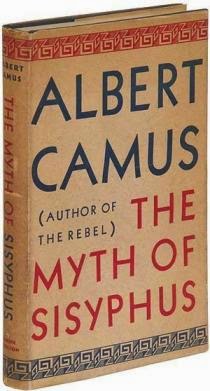
It’s one of my favorite myths, not least because it was explored by French existentialist writer Albert Camus. Camus called Sisyphus “the absurd hero”—admiring his acceptance of his burden and his scorn of the gods as he tenaciously pursued his never-ending task.

I love this story. In a way, it captures so much of adult life. Especially the parts we did not really think about as kids when we fantasized about the freedom and excitement of growing up.

Take laundry. I know I should be thankful that I am probably among a pretty small percentage worldwide who has an excellent electronic setup in my own home, able to complete numerous loads a day. Yet I dread doing the laundry just because of the repetition of putting it in, taking it out, putting it into the dryer, taking it out, folding it (the most tedious and therefore the most neglected part of this task) and putting it away. It isn’t difficult; it isn’t challenging. It’s just time-consuming and tedious, and for a family of four, it has to be done frequently if not daily.

The Laundry of Sisyphus.

I had forgotten that this myth also applies to children’s lives at school. Take timed math tests. Or spelling quizzes. Or all sorts of busy-work that our children do in order to prepare for standardized tests or school-wide tests or district tests or just class tests. It can feel never-ending. Maybe that’s why growing up seems so cool to kids sometimes. Not only the freedom but also the variety appeals.

The frequent tediousness of school is one reason why I don’t send my daughters to “school after school.” We live in Silicon Valley, an area of highly-educated parents and their heavily programmed children. Many attend academic classes after the regular schoolday ends, complete with more worksheets, assessments, tests.

Not here. My kids are outside jumping on the trampoline, just about the least tedious type of repetition there is for a child. Every bounce produces a fresh movement, a new sensation, a unique jump or flip. A weightless feeling that lends itself to imagination and creative chaos.

Or practicing an instrument. That’s another repetition that can be beautiful. It leads to improvement and learning, and to breakthroughs in creativity that happen every once in a while.

This just shows what we should remember while working away at the laundry: Not all repetition is bad. Some of it can transform us.

And perhaps we could adopt a philosophical, or even a Zen-style approach to laundry, etc. We could find a way to meditate as we fold, to relax as we carry, to reflect as we straighten and put away.

Sisyphus would approve. And so would Camus. He ends his famous essay about the Greek myth this way:  For Sisyphus, “each atom of that stone, each mineral flake of that night-filled mountain, in itself forms a world. The struggle itself toward the heights is enough to fill a man’s heart. One must imagine Sisyphus happy.