School can be boring, my 9-year-old daughter reminded me recently. “You do the same thing over and over again, even if you already know how to do it,” she said. You have no choice. It just has to be done.
“Yes. That’s tedious,” I said, in response, which started a conversation about the meaning of the word. “Tedious is something dull and repetitive, something that bores you to tears and that seems to go on forever—but usually, you just have to do it anyway, again and again,” I explained.
“Oh yes, like that Ancient Greek story about the man who had to push the big rock up the hill every day, and then it falls down and he has to do it over again!” she cried.
“You mean Sisyphus.” I thought for a moment. Sisyphus was a king punished by the Greek gods for his offenses (which may have included temporarily chaining up Death, preventing him from taking further victims). His burden in the underworld? To forever push a boulder up a mountain, and then watch it fall to the bottom, only to begin again the next day.
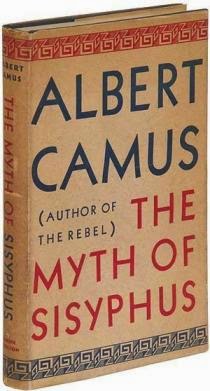
It’s one of my favorite myths, not least because it was explored by French existentialist writer Albert Camus. Camus called Sisyphus “the absurd hero”—admiring his acceptance of his burden and his scorn of the gods as he tenaciously pursued his never-ending task.
I love this story. In a way, it captures so much of adult life. Especially the parts we did not really think about as kids when we fantasized about the freedom and excitement of growing up.
Take laundry. I know I should be thankful that I am probably among a pretty small percentage worldwide who has an excellent electronic setup in my own home, able to complete numerous loads a day. Yet I dread doing the laundry just because of the repetition of putting it in, taking it out, putting it into the dryer, taking it out, folding it (the most tedious and therefore the most neglected part of this task) and putting it away. It isn’t difficult; it isn’t challenging. It’s just time-consuming and tedious, and for a family of four, it has to be done frequently if not daily.
The Laundry of Sisyphus.
I had forgotten that this myth also applies to children’s lives at school. Take timed math tests. Or spelling quizzes. Or all sorts of busy-work that our children do in order to prepare for standardized tests or school-wide tests or district tests or just class tests. It can feel never-ending. Maybe that’s why growing up seems so cool to kids sometimes. Not only the freedom but also the variety appeals.
The frequent tediousness of school is one reason why I don’t send my daughters to “school after school.” We live in Silicon Valley, an area of highly-educated parents and their heavily programmed children. Many attend academic classes after the regular schoolday ends, complete with more worksheets, assessments, tests.
Not here. My kids are outside jumping on the trampoline, just about the least tedious type of repetition there is for a child. Every bounce produces a fresh movement, a new sensation, a unique jump or flip. A weightless feeling that lends itself to imagination and creative chaos.
Or practicing an instrument. That’s another repetition that can be beautiful. It leads to improvement and learning, and to breakthroughs in creativity that happen every once in a while.
This just shows what we should remember while working away at the laundry: Not all repetition is bad. Some of it can transform us.
And perhaps we could adopt a philosophical, or even a Zen-style approach to laundry, etc. We could find a way to meditate as we fold, to relax as we carry, to reflect as we straighten and put away.
Sisyphus would approve. And so would Camus. He ends his famous essay about the Greek myth this way: For Sisyphus, “each atom of that stone, each mineral flake of that night-filled mountain, in itself forms a world. The struggle itself toward the heights is enough to fill a man’s heart. One must imagine Sisyphus happy.”
 MeredithInk